If you want a town where daily life feels manageable, familiar, and connected, Dyersville deserves a closer look. For many buyers, the goal is not just finding a house. It is finding a place where errands are easy, the commute makes sense, and local events actually feel part of your routine. This guide will help you understand what everyday life and housing in Dyersville, Iowa can look like, so you can decide whether it fits the way you want to live. Let’s dive in.
What Daily Life Feels Like in Dyersville
Dyersville is a small city of about 4,400 residents spread across roughly 7 square miles. The median age is 43, which adds to the sense of a settled, steady community rather than a fast-changing city environment. Local community materials describe it as friendly and small-town in character.
At the same time, Dyersville is not cut off. Its location along U.S. Highway 20 and Iowa Highway 136 helps it function as part of the broader Dubuque corridor. That means you can enjoy a smaller community feel while still having practical access to surrounding areas.
Day to day, Dyersville appears built around the services most people use regularly. City Hall is downtown, the city provides water service, and the area has a 20-bed critical access hospital. The volunteer fire department also serves homes, businesses, and farmsteads across a 66-square-mile area.
The local business base is notable for a town this size. The Chamber highlights more than 275 member businesses that accept Chamber dollars, which points to a commercial base that supports many everyday needs close to home. For buyers who value convenience without big-city density, that matters.
Why Dyersville Stands Out
Some small towns have a quiet identity. Dyersville has that, but it also has a tourism profile that feels bigger than its population. The city is closely tied to attractions like the Field of Dreams Movie Site and Farm House Tours, the National Farm Toy Museum, the Baseball Hall of Dreams, the Basilica of St. Francis Xavier, and the Dyer-Botsford House & Doll Museum.
That mix gives Dyersville a unique personality. It is the kind of place where you can have an ordinary weekday routine and still live in a community that draws visitors for recognizable destinations. For some buyers, that adds energy and pride without making daily life feel crowded.
Local events also help shape the rhythm of the year. Annual highlights include the farmers market, Summer Farm Toy Show, Downtown Summer Nights, a July 3 celebration with fireworks, Ghost Player Saturdays at Field of Dreams, and the National Farm Toy Show. If you enjoy a calendar with familiar local traditions, Dyersville offers more than you might expect for its size.
Recreation and Getting Outside
Outdoor access is part of everyday life here too. Dyersville connects to the 30-mile Heritage Trail, which adds a useful option for biking, walking, and enjoying the surrounding landscape. That kind of amenity can make a real difference if you want simple ways to get outside close to home.
The city’s aquatic center is another practical plus. It includes a zero-depth area, slides, a wading area, and a large pool. For many households, amenities like this support a routine that feels active and local rather than dependent on driving elsewhere for recreation.
Schools and Nearby Services
For buyers thinking about education access, the setup is straightforward. The Western Dubuque Community School District serves the area, with Dyersville Elementary located in town and Western Dubuque High School in Epworth. Beckman Catholic also operates in Dyersville.
For postsecondary options, Northeast Iowa Community College in Peosta is nearby, and several Dubuque colleges are about 30 miles away according to the Dyersville Area Economic Development Corporation. That gives residents a mix of in-town and regional access points for continued education.
Healthcare and emergency services are also part of the practical picture. The presence of a 20-bed critical access hospital and city-supported services helps reinforce Dyersville’s role as a town built for daily living, not just as a pass-through location.
Commuting from Dyersville
One of Dyersville’s strongest selling points is convenience. According to local economic development materials, the city is within 50 minutes of Interstates 380 and 80 by way of U.S. 20. U.S. 20 and Iowa 136 are right at the city’s edge, which helps connect residents to the wider region.
Dubuque Regional Airport is about a 30-minute drive away. That may not matter every week, but for some households it is a useful part of the bigger picture. It makes Dyersville feel more connected than its size alone might suggest.
The Census Reporter profile shows a mean travel time to work of 17 minutes. That short average commute supports the idea that Dyersville works well for people who want manageable travel times without giving up access to jobs and services across the corridor.
What Housing Looks Like in Dyersville
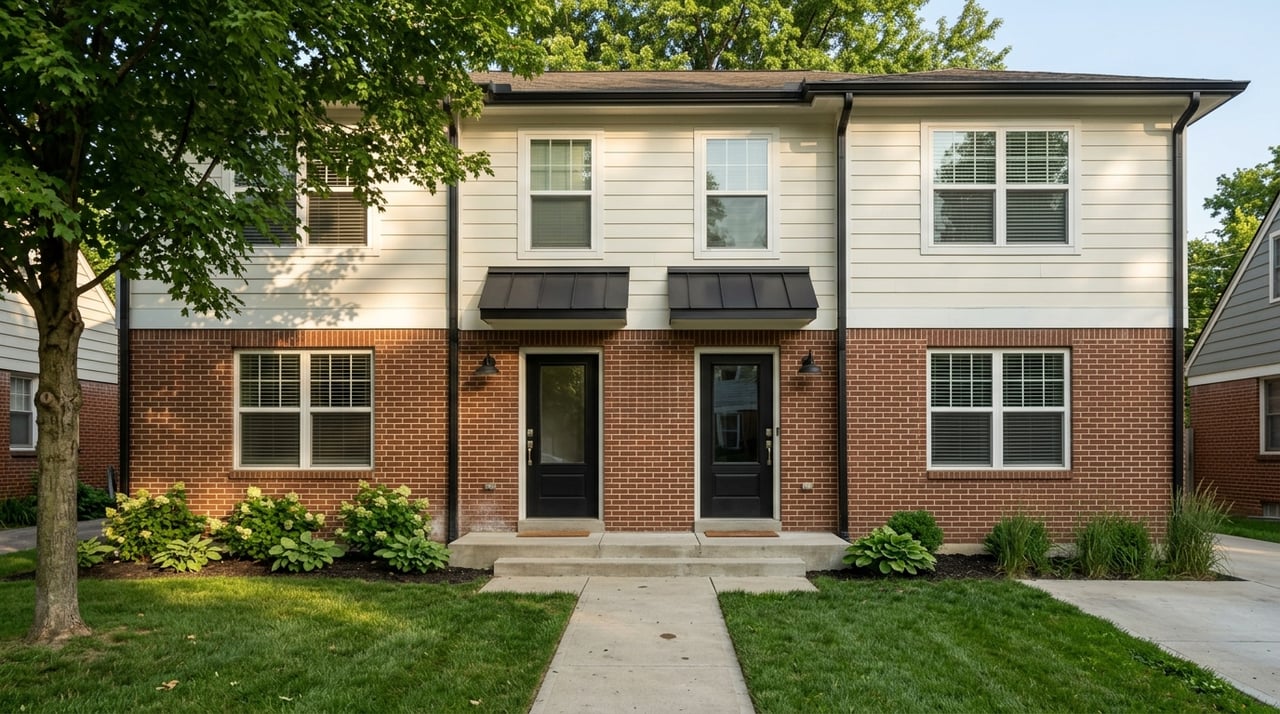
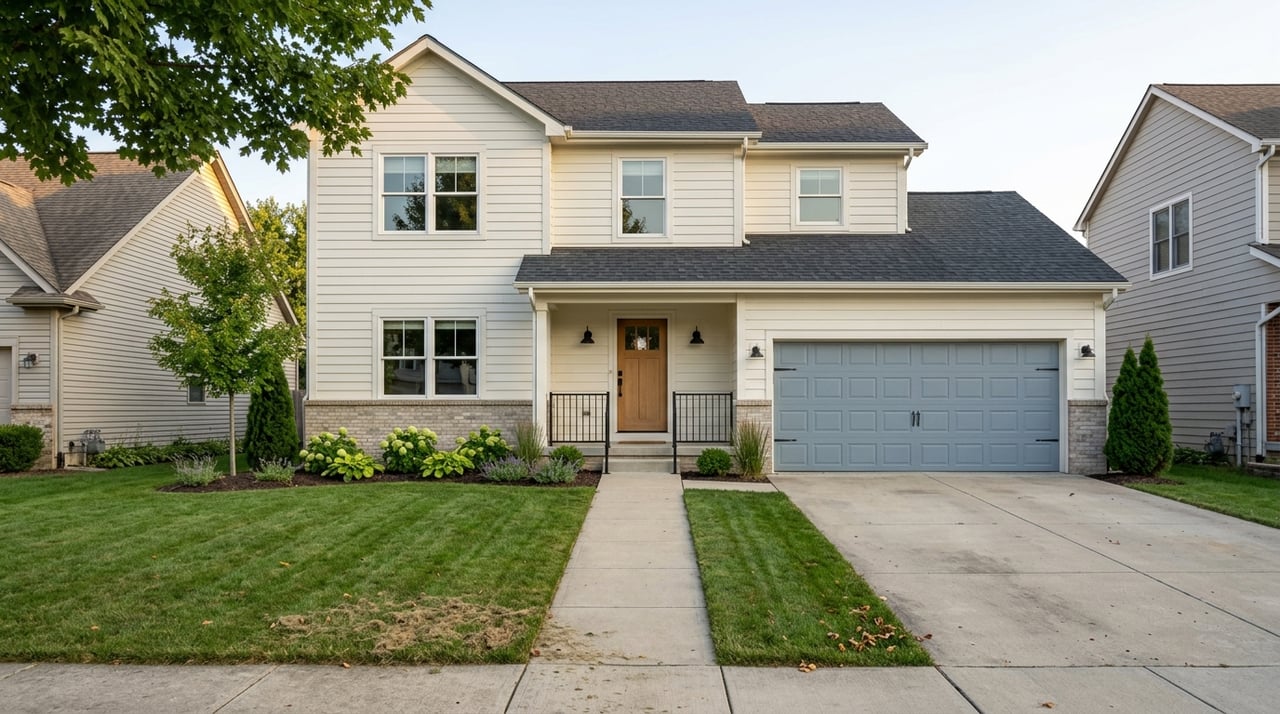
Dyersville’s housing stock appears to center mostly on detached single-family homes, with some attached, duplex, and multifamily options mixed in. That conclusion is supported by the city’s zoning code, which lays out several residential districts with a range of lot sizes and housing types. In practical terms, buyers can expect a market that leans traditional but still offers some variety.
In the R-1 district, minimum lot areas range from 7,200 to 10,000 square feet. In R-2, minimum lots range from 3,000 to 10,000 square feet, and in R-3, from 2,000 to 10,000 square feet depending on the use. Those numbers suggest choices that can include more standard in-town lots as well as housing formats with smaller footprints.
The A-2 rural residential district allows for much larger lots of 1 to 2 acres. That expands the housing picture beyond city blocks and into edge-of-town or more rural-feeling settings. If you want more outdoor space without leaving the Dyersville area entirely, that is an important feature of the market.
Newer Areas and Older Neighborhoods
Dyersville’s comprehensive plan reinforces a clear residential pattern. It supports general urban residential land use that emphasizes single-family detached homes served by city utilities, while still allowing attached, duplex, and other housing types that fit within integrated neighborhoods. In other words, growth is expected, but it is intended to blend with the city’s existing character.
The plan also notes that lot sizes should be comparable to surrounding neighborhoods. That is useful for buyers who care about consistency in how streets and subdivisions feel over time. It points to a development approach that values fit and continuity rather than dramatic shifts in lot size or layout.
Older parts of town have their own distinction. The Neighborhood Conservation Overlay applies to the original plat of Dyersville and the Dyersville East Subdivision, with the stated purpose of preserving design characteristics in neighborhoods platted before the current code took effect. That tells you some of the city’s older neighborhoods likely have a built form and street pattern that stand apart from newer subdivisions.
What Home Styles You May See
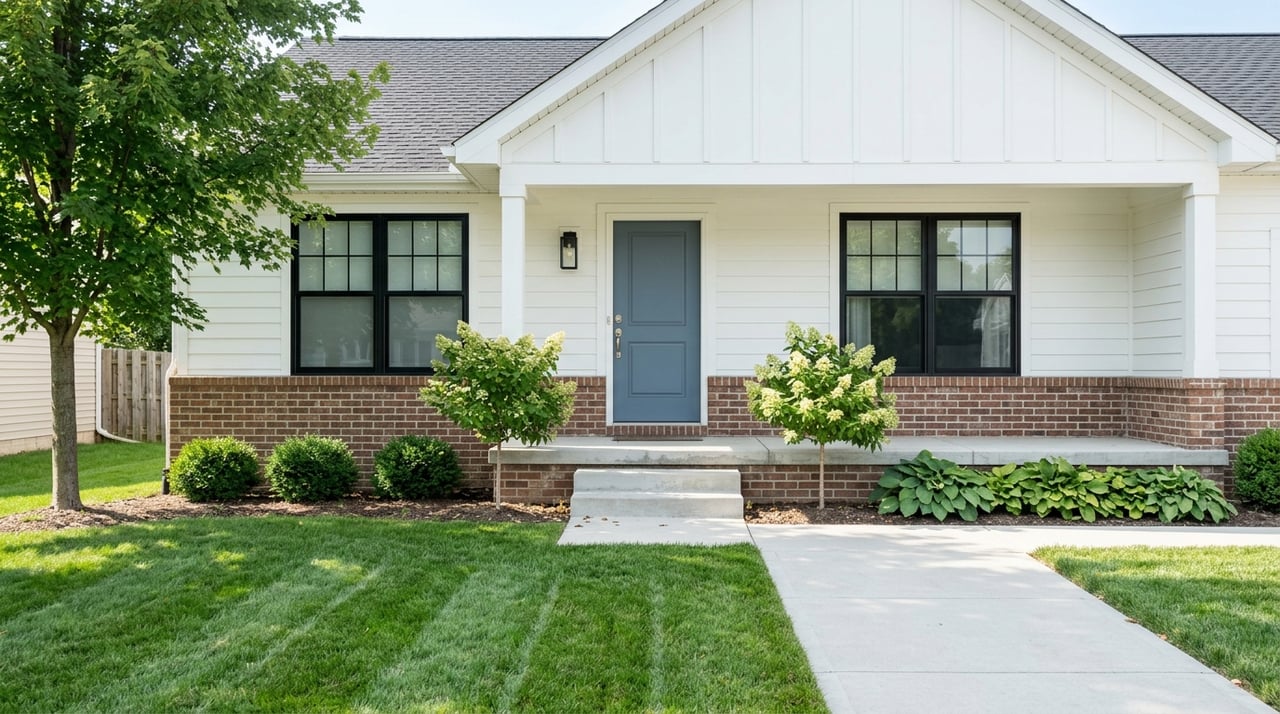
While the research does not provide an official home-style inventory, recent listing snapshots commonly show ranch and split-foyer homes, along with some brick ranches and acreage properties on the edge of town. That lines up with the lot patterns and zoning framework already in place. For buyers, it suggests a housing search that may include both practical in-town homes and larger-lot properties with a bit more breathing room.
This can be especially appealing if you want flexibility. Some buyers are looking for a manageable single-family home close to town services. Others want extra lot space, a quieter edge-of-town setting, or a property that feels more rural while still staying connected to Dyersville.
Who Dyersville May Fit Best
Dyersville is often a strong fit for buyers who want a smaller-town setting with a clear daily rhythm. Local events, nearby schools, recreation options, and practical services all support that lifestyle. It can appeal to first-time buyers, move-up buyers, downsizers, and people relocating within the Dubuque-area corridor.
The Census Reporter profile lists a median household income of $83,559 and a median value of owner-occupied housing of $234,100. That suggests a market that is not at the very lowest end of the cost spectrum, but still moderate in a regional context. For many buyers, that balance can make Dyersville worth serious consideration.
The tradeoff is fairly straightforward. Compared with a larger metro, you gain a more compact community, a stronger small-town identity, and access to larger lots at the edge of town. In exchange, you may have fewer dense shopping, dining, and housing options than you would find in a bigger city.
How to Approach a Move to Dyersville
If Dyersville is on your shortlist, it helps to think beyond price alone. Consider how you want your week to feel. Commute time, lot size, access to local services, and the difference between older neighborhoods and newer areas can all matter just as much as square footage.
A focused home search can help you compare options clearly. You may want to narrow your search by:
- In-town convenience versus edge-of-town space
- Older neighborhood character versus newer subdivision layout
- Standard city lots versus 1- to 2-acre rural residential parcels
- Single-family homes versus duplex, attached, or multifamily options where available
If you are also weighing Dyersville against nearby communities, the real question is often lifestyle fit. Dyersville offers a practical, connected version of small-town living that works especially well for buyers who want simplicity, community identity, and easier day-to-day routines.
If you want help comparing Dyersville with other Eastern Iowa options, or you are ready to tour homes in the area, Jim Dix can help you move forward with clear advice, steady communication, and a no-pressure approach.
FAQs
What is everyday life like in Dyersville, Iowa?
- Dyersville offers a small-town routine with practical local services, community events, recreation options, and regional access through U.S. 20 and Iowa 136.
What types of homes are common in Dyersville, Iowa?
- The housing mix appears to focus mostly on detached single-family homes, with some attached, duplex, multifamily, and larger-lot rural residential properties.
Are there larger lots available in Dyersville, Iowa?
- Yes. In addition to standard in-town residential lots, the A-2 rural residential district allows 1- to 2-acre lots.
How long is the average commute from Dyersville, Iowa?
- The mean travel time to work is 17 minutes, which supports Dyersville’s appeal as a manageable commuting town.
What schools serve Dyersville, Iowa?
- The area is served by the Western Dubuque Community School District, with Dyersville Elementary in town and Western Dubuque High School in Epworth, and Beckman Catholic also operates in Dyersville.
Is Dyersville, Iowa connected to nearby cities?
- Yes. Dyersville sits along U.S. 20 and Iowa 136, is within 50 minutes of Interstates 380 and 80, and is about 30 minutes from Dubuque Regional Airport.