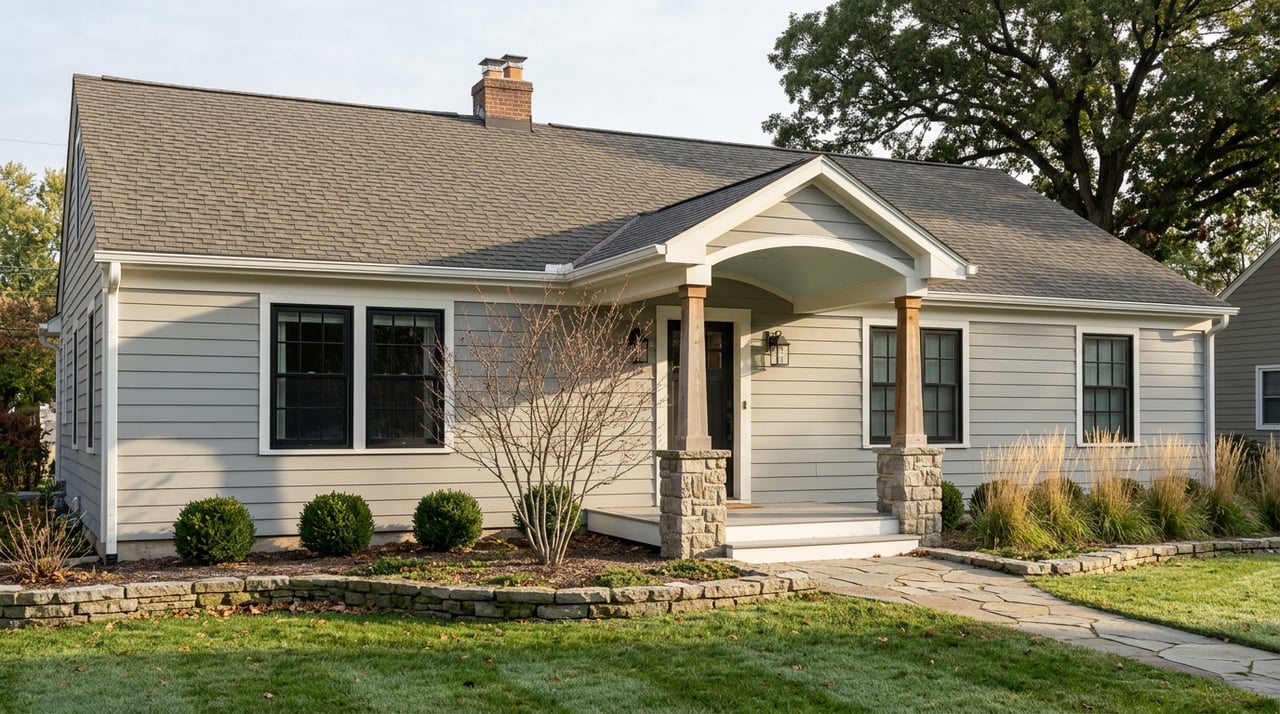
Drive three minutes across the Julien Dubuque Bridge and the ZIP code changes, the school district changes, and the state changes. What a lot of buyers don't clock until they're mid-transaction is that the entire legal machinery underneath the sale changes too. Not the paint colors or the lot sizes. The actual rules for how a deal becomes binding, how title gets proven, and how much you'll owe the county every single year after closing.
Buyers comparing a house in Dubuque, Iowa to one in East Dubuque, Illinois usually do the obvious math: list price, square footage, maybe a rough guess at property taxes. That comparison misses the two things that actually cost money and time in a cross-river purchase: the closing process itself, and a property tax gap that has nothing to do with the price tag on either house.
The Deal Isn't Done When You Think It's Done
In Iowa, the standard process moves forward after a buyer and seller sign a purchase agreement and the financing and inspection contingencies clear.
Illinois does. Angelillo Law identifies the Multi-Board Residential Real Estate Contract as a standard Illinois form, while Illinois Estate Law explains that signing triggers a five-business-day attorney review period. O'Flaherty Law explains that either side's attorney can approve the contract, propose changes, or terminate it outright during that window, and until it closes without objection, the deal is legally still open. That means a buyer in East Dubuque who thinks they have a signed contract in hand actually has something closer to a strong intention to have a contract, pending five business days of legal cover.
This isn't a formality that gets rubber-stamped. Attorneys use the window to negotiate repair credits after inspection, adjust closing dates, or flag title issues before anyone is contractually locked in. On the Iowa side of the bridge, the timeline is different.
For a buyer moving from the Iowa side, that five-day gap on the Illinois side can make the transaction feel different. It follows a different schedule.
Two Ways To Prove Someone Actually Owns The House
The bigger structural difference shows up in how each state confirms clear title, and it's a good example of how two neighboring states solved the same problem in opposite ways.
Danilson Law explains that Iowa-licensed insurers are barred by state law from issuing title insurance, so Iowa built its own alternative: Iowa Title Guaranty, a state-run program administered through the Iowa Finance Authority. Before an Iowa closing, an attorney reads the property's abstract, a bound, physical record of every recorded document tied to that parcel, often going back decades, and issues a title opinion. Once that opinion is clean, the attorney acts as a field issuer for the state guaranty. It's a slower process by design. Rural parcels with long ownership histories and records that were never digitized can push the abstract examination past three weeks.
Illinois runs on the system most of the country uses. A title company searches its own databases, issues a commitment, and sells a private title insurance policy at closing. The attorney's role during the review period is to read the contract, not the deed history.
| Dubuque, Iowa | East Dubuque, Illinois | |
|---|---|---|
| Title protection | Iowa Title Guaranty, a state program; private title insurance is not permitted | Private title insurance through a title company |
| What the attorney reviews | The abstract of title, often decades of recorded history | The signed purchase contract itself, during a set window |
| When the process moves forward | After signing and contingency review | After the attorney review period closes without objection |
Iowa's system is built to examine the past before the deal closes. Illinois's system is built to pause the present after the deal is signed. Both exist to catch the same kind of costly mistake. They just catch it at different points on the calendar.
The Number That Doesn't Show Up On The Listing
Here's where the comparison actually gets expensive, and it has nothing to do with either state's paperwork.
Jo Daviess County, Illinois, which includes East Dubuque and Galena, carries a median effective property tax rate of 2.07% as of 2026 assessment data, below the Illinois state median of 2.33% but, more usefully for this comparison, well above what buyers are used to paying just across the river. Dubuque County, Iowa's effective rate lands closer to 1.15% to 1.3% depending on the specific property and assessment year, with typical annual bills clustering between roughly $2,700 and $2,900.
That gap alone is real. But it's not even the most useful part of the Jo Daviess County data, because the county isn't one flat number. Within Jo Daviess County, Galena carries the lowest township rate at 1.80%, while Warren carries the highest at 2.91%. A buyer comparing "Illinois property taxes" to "Iowa property taxes" as if each side of the river has a single number is already working from the wrong assumption. The river changes the range you're working with. The specific taxing body you land in inside Illinois changes the actual figure.
This is the piece that doesn't show up on a listing sheet. Two houses priced identically, one in Dubuque and one in East Dubuque, can carry annual tax bills that differ by well over a thousand dollars, and the difference has nothing to do with either home's condition or size. It's baked into which side of a state line, and which taxing township within that state, the deed gets recorded in.
The Transfer Tax Is The Part That Isn't The Story
It would be easy to assume the one-time transfer tax paid at closing tracks the same pattern. It doesn't, and that's worth clearing up so it doesn't get confused with the annual tax gap above.
Scott County Recorder lists Iowa's real estate transfer tax at $0.80 for every $500 of the sale price, with the first $500 exempt; Iowa Transfer Tax Calculator says the seller pays it at recording. Jo Daviess County Code sets Jo Daviess County's transfer tax, the county-level portion collected through the state's MyDec electronic filing system, at $0.25 per $500 of value stated on the deed. These are one-time closing costs measured in hundreds of dollars on a typical home sale, not the thousand-plus-dollar annual gap sitting in the property tax comparison above. The real financial story in a cross-river purchase isn't the stamp on the deed. It's the bill that arrives every year after.
Before You Write An Offer On Either Side Of The Bridge
- Ask which specific taxing township a Jo Daviess County property sits in before comparing its tax bill to anything on the Iowa side. County medians hide a real spread.
- If you're buying in Illinois, confirm your attorney is engaged and ready to review the contract the same day it's signed. The five-business-day clock doesn't pause for a slow start.
- If you're buying in Iowa, ask early whether the abstract is up to date. A missing or outdated abstract adds real weeks to a closing that would otherwise move faster.
- Don't assume your Iowa mortgage pre-approval process maps cleanly onto an Illinois closing timeline, or the reverse. Loan officers on both sides can usually work with either state, but the closing calendar they're building around is different.
- Budget the annual property tax bill separately from the purchase price on both sides. It's the number that actually compounds over time.
A Few Common Questions
Does the same real estate agent handle both sides of the river? Only if that agent holds licenses in both Iowa and Illinois. Plenty of agents work exclusively on one side, which is fine for a buyer who's committed to one state, but it means comparing Dubuque to East Dubuque properly usually requires someone licensed in both.
Does the Illinois attorney review period slow down an offer in a competitive market? It adds a defined five business days after signing, but it doesn't delay when you can make an offer or get it accepted. It shows up after acceptance, as a built-in negotiation and exit window rather than a bottleneck at the front end.
Is Iowa's abstract system actually slower than a title company search? Generally yes, particularly on rural or long-held parcels. A title company search in a title-insurance state typically wraps in seven to ten business days. Iowa's abstract examination often runs longer, sometimes past three weeks on properties with complicated ownership histories.
If you're weighing a move across the river, in either direction, the price tag is the easiest number to compare and the least useful one on its own. The closing process and the tax bill are where the real differences live, and they don't show up until you're already in the transaction unless someone who works both sides walks you through them first.
If you're comparing options on either side of the Mississippi, Jim Dix is licensed in both Iowa and Illinois and can walk you through what actually changes, and what doesn't, before you write an offer. Let's Connect.
This article is general information, not legal, tax or financial advice. Consult a qualified professional about your situation.